Dear supporters,
We are writing this from Chizarira National Park, where the work continues every day alongside the Defend and ZimParks team, and the communities who live around this extraordinary landscape.
Chizarira has lived more than one life.
Damien: When I first came here in 2009, it was a different place. Due to economic pressures and lack of resources, staffing was thin. Infrastructure was falling apart. Wildlife was scarce. You could spend days moving through the park and see very little. Elephant carcasses were a common sight, stark reminders of how quickly a system can unravel when funding runs out.
Today, the shift is undeniable.
There is now a disciplined and professional team of more than one hundred staff. Wildlife is returning in visible numbers. Operations are structured, accountable, and data driven. A fully integrated digital platform connects deployments, reporting, stock control, budgets, and follow up in real time. It is the kind of operational backbone that allows a park to move from survival to recovery.
Chizarira sits in one of the most important ecological corridors in sub–Saharan Africa, linking through to Hwange and into Botswana. Together, this landscape supports the largest elephant population on the planet and the largest cross border elephant migration between two countries. In the early 2000s this region lost around five thousand elephants. Today, elephant poaching here has dropped by approximately ninety five percent. That kind of turnaround does not happen by chance. It happens when people commit for the long term.
But if conservation stops at the park boundary, it eventually fails.
Briana: Walking into Mucheni Clinic brought that home in a way that statistics never can. As a mother, standing in a rural maternity room cracks your heart open in a way you can’t undo. You think about the circumstances we are born into and how much of life depends on that starting line. On one of the walls were handwritten emergency instructions. One of them read: “Yell for extra help.” It is a brutal reality check.
Upgrading the maternity facilities at Mucheni has become a priority within our broader work here. Reliable solar power, safe equipment, clean water, and dignified conditions for mothers are not side projects. They are part of the same system. When healthcare improves, when schools are repaired, when water is secure, trust builds. When trust builds, conservation holds.
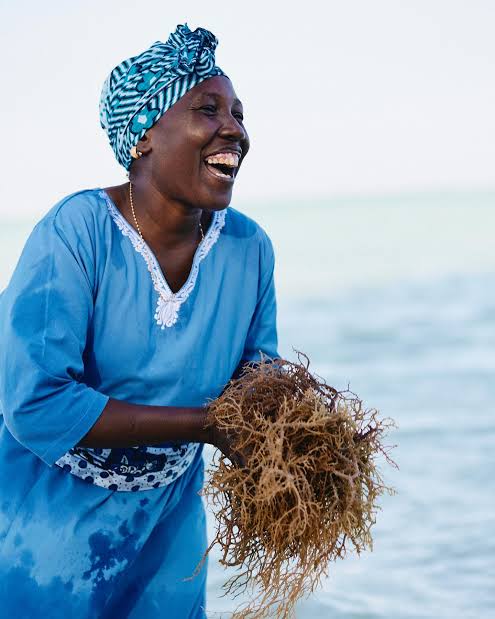
Across this landscape we are strengthening clinics, investing in solar infrastructure, improving water access, supporting classrooms and kindergartens, and expanding women led food systems. At the same time, enforcement capacity continues to scale both inside and outside the park, extending stability across a wider arc and increasing pressure on wildlife crime networks.
This is what linking social impact to conservation looks like in practice. It is not charity. It is strategy.
– – – – – –
Chizarira is no longer a park in decline. It is a landscape in recovery. The foundations are strong. The systems are working. The wildlife is returning. Now the task is to accelerate, not retreat.
If you want to stand behind conservation that protects elephants while strengthening communities, this is the place to do it. Your support directly helps fuel the rangers in the field, the clinics in the villages, the schools in the communities, and the long-term stability of one of Africa’s most important wildlife corridors.
This landscape has turned a corner. With the right backing, it will not look back.
Thank you for following this remarkable story.
In solidarity,
Briana and Damien
– – – – – –
CHIZARIRA IN PICTURES
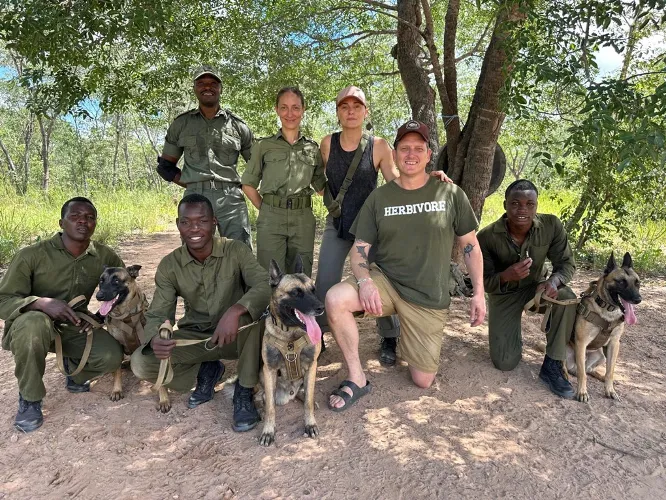
The K9 Unit in action. With a tracking success rate of over 70 percent on poaching incursions, these dogs and their handlers are a powerful force multiplier for the law enforcement teams on the ground. Fast, disciplined, and relentless, they dramatically increase the likelihood of interception while reducing risk to rangers. This is modern conservation security in practice, targeted, intelligent, and highly effective.
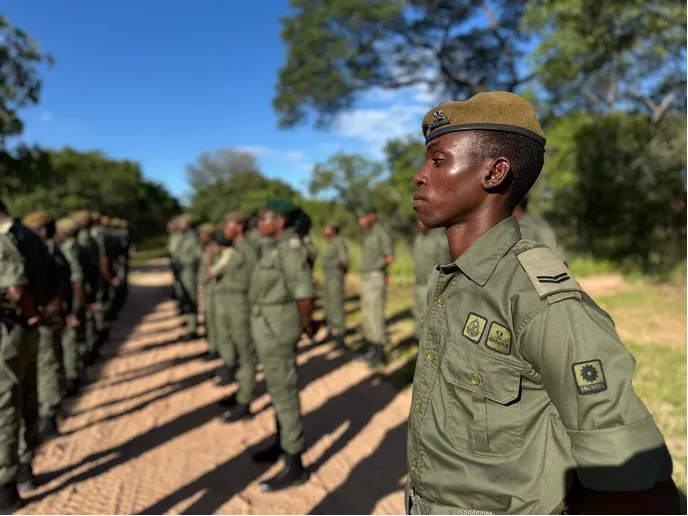
Rangers on the Front Line – Zambezi Valley. These are the men and women holding the line in one of Africa’s most important wilderness corridors. Rangers here live and work in remote outposts, often spending months away from their families to patrol vast, rugged terrain under intense heat and constant pressure. Their days begin before sunrise and end long after dark, tracking incursions, dismantling snares, responding to intelligence, and protecting wildlife that cannot protect itself. This is not just a job. It is discipline, sacrifice, and quiet courage in service of something far bigger than any one of us.
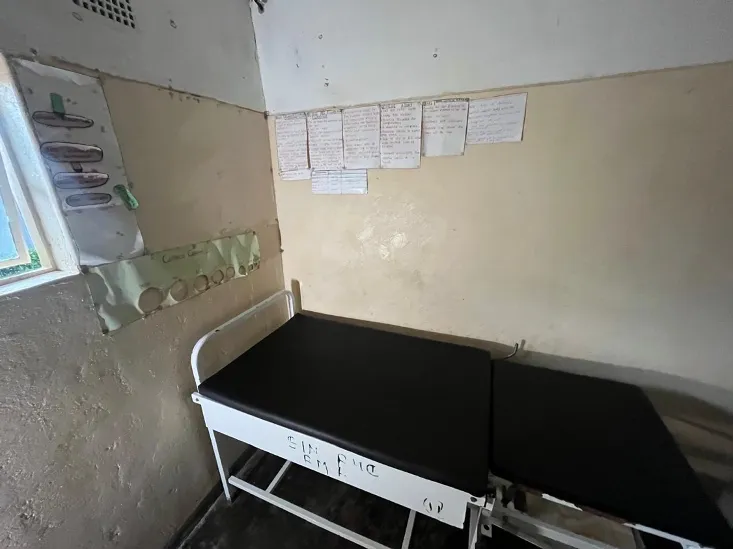
A single maternity bed in Mucheni Clinic, serving women across the communities surrounding Chizarira. On the wall above it are handwritten emergency instructions for severe pre-eclampsia, one of the most dangerous complications of pregnancy. In cases like this, minutes matter. Magnesium sulphate, rapid response, and skilled care can mean the difference between life and death.
The room is basic. Limited equipment. No advanced monitoring. No surgical backup on site. Yet this is where mothers come to give life.
Upgrading facilities like this is not optional. When emergencies strike, preparation is everything. Supporting clinics like Mucheni is part of protecting communities, and protecting communities is part of protecting the landscapes they call home.

Our son Astraeus sits in an open-air classroom at the local primary school serving more than 700 children across the Chizarira landscape. Rough benches, exposed beams, dirt floors, and a roof that offers only partial protection from rain and heat. Many of the students children walk more than 10 kilometres each way to get here. They arrive ready to learn. The conditions should match that commitment. As part of our next phase of work in this region, we are prioritising the refurbishment and rebuilding of these learning spaces so that education is safe, dignified, and built to last.
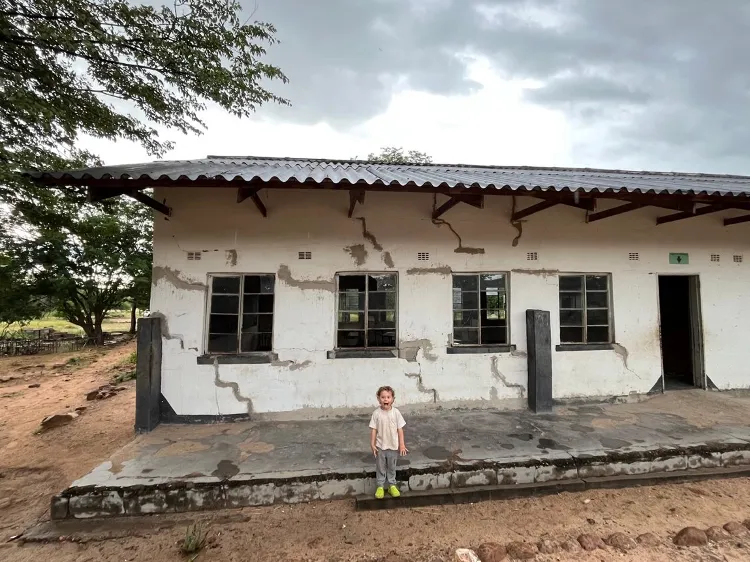
Cracked walls, failing infrastructure, and classrooms in urgent need of repair. Some buildings have already collapsed. This school anchors the surrounding communities, yet its facilities reflect years of neglect and limited resources. Education is not separate from conservation. It is central to it. We are working with partners on the ground to restore classrooms, strengthen infrastructure, and ensure that the 700 children who depend on this school have a safe and functional place to learn and grow.

The Operations Room – The Nerve Centre of Chizarira. Behind every successful patrol is a system that connects people, information, and action in real time. The operations room at Chizarira is the digital umbrella under which the park now runs. Patrol deployments, incident reports, wildlife sightings, logistics, communications, budgets, field kit management, and follow up actions are all centralised here.
This integrated platform allows field teams to operate with precision and accountability, turning raw data into coordinated response. It is where strategy meets ground reality, and where modern conservation is managed at scale.
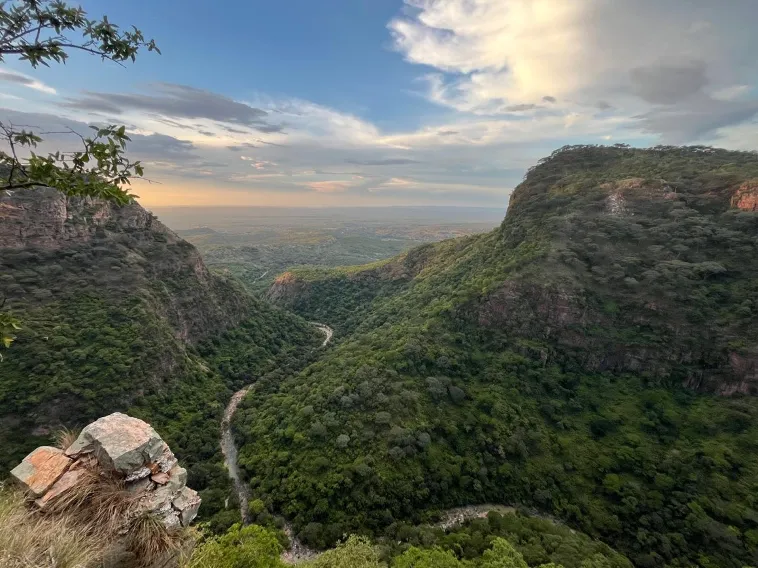
The iconic Mucheni escarpment, one of Southern Africa’s great wilderness vistas. From this vantage point, the scale of Chizarira becomes clear, vast forests, winding river systems, and a corridor that connects into one of the largest elephant landscapes on Earth. Protecting places like this is not optional. It is essential, and it is why this work matters far beyond the horizon you see here.
– – – – – –
ABOUT ABUNDANT VILLAGE
WHO WE ARE
In Africa, Abundant Village is working across five major land and seascapes, supporting the long-term protection of more than 4.2 million hectares (10.5 million acres) of some of the most important ecosystems on Earth. This is a larger area than all national parks in the lower 48 United States combined.
We focus on places under real pressure, ecosystems at genuine risk of being lost, and we work alongside the people who live there to secure protection that lasts. Our work operates at ecosystem scale and is built for the long term, not short project cycles or temporary fixes.
Abundant Village brings together deep field experience, trusted local partnerships, and disciplined delivery to create conservation that is practical, resilient, and grounded in real-world conditions.
WHAT WE DO
We co-create and implement long-term programmes that protect and restore some of the world’s most important and threatened ecosystems.
Our work begins by identifying critical land and seascapes under pressure. From there, we partner with local communities, trusted organisations, and authorities to design and deliver conservation models that are locally led, practical, and capable of scaling over time.
By directly linking conservation to livelihoods, governance, and community wellbeing, we help ensure that protection becomes something people stand behind, not something imposed, and that it endures for generations.
Abundant Village is a US registered, 501(c)(3) nonprofit organization:
Tax ID # is 93-1914783. Donations are tax-deductible as allowed by law.
We hold the GuideStar Platinum Seal, a recognition awarded to just 1 % of U.S. charities. A mark of excellence in financial transparency and effectiveness in using donor funds to deliver on our mission.